Why Air Pollution and Climate Change Are Connected
In July, many people saw headlines about record-breaking global temperatures.
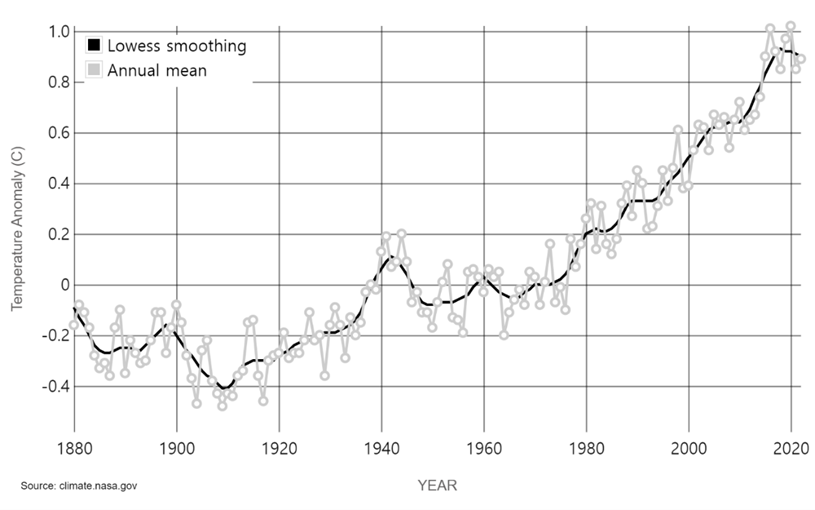
Across the world, extreme heat continued to set new records. Reports noted that global temperatures exceeded 16.92°C, the level observed in August 2016, which had been known as one of the hottest periods in recorded history.
This was not caused by one factor alone. Natural weather patterns such as El Niño combined with the continued increase of human-driven carbon dioxide and greenhouse gas emissions, raising temperatures across both land and ocean.
According to research from NASA’s Goddard Institute for Space Studies (GISS), the Earth’s surface temperature has risen by approximately 1°C compared with the 1880s. The World Meteorological Organization (WMO) has also warned that the goal adopted under the 2015 Paris Agreement — limiting global temperature rise to within 1.5°C above pre-industrial levels — has a high probability of being exceeded within the next five years.
But extreme heat is only one part of the climate crisis.
As the Intergovernmental Panel on Climate Change (IPCC) has made clear, climate change is also connected to droughts, floods, rising sea levels, rapid ecosystem changes, and species extinction. It is not only an environmental issue. It is an existential threat to human life and safety.
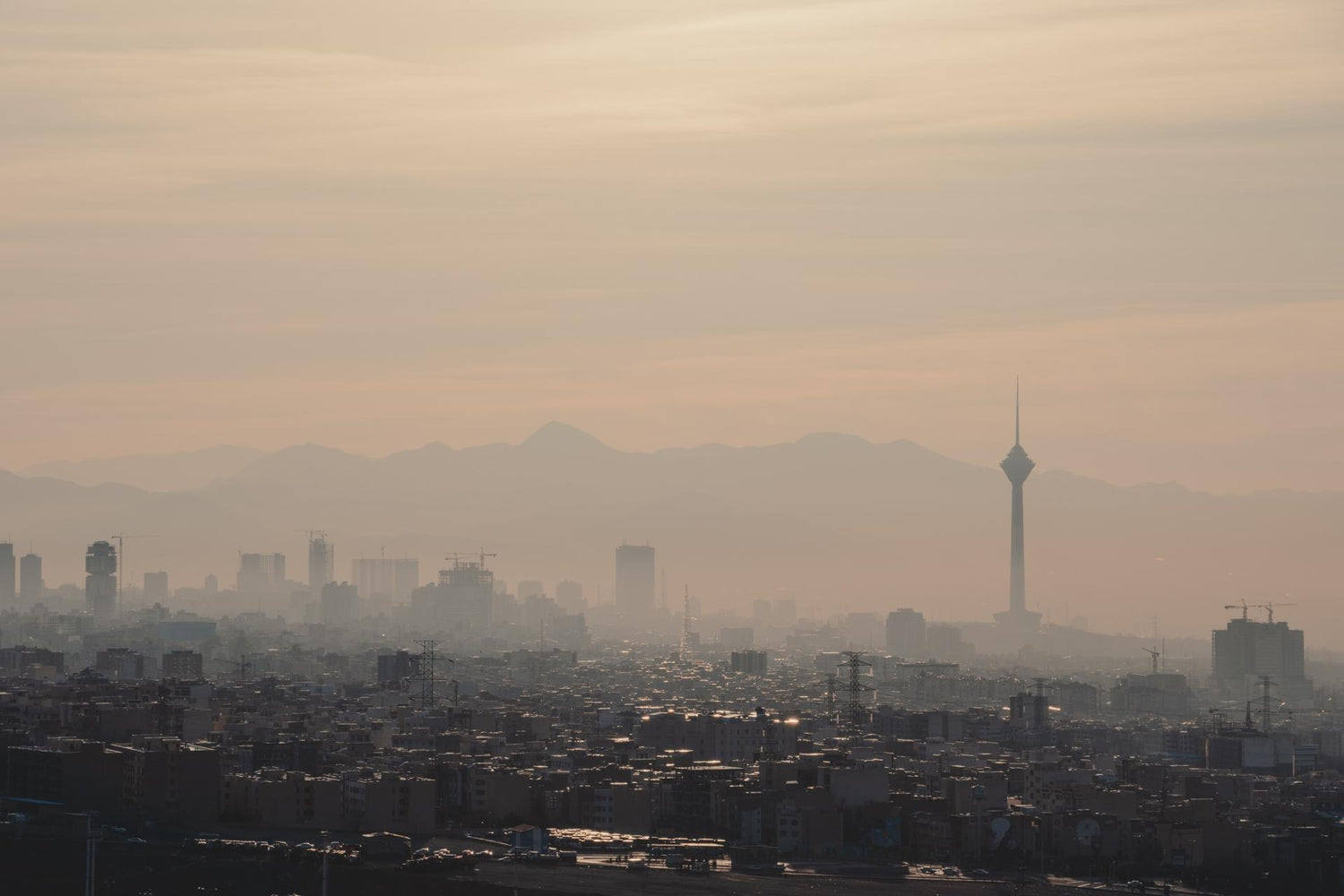
The connection between human activity, air pollution, and climate change has been demonstrated through many reports. The irony is clear: the pollution created by human activity is now returning as a threat to human life.
Air pollutants and greenhouse gases are different
To understand why air pollution and climate change must be addressed together, we first need to distinguish between air pollutants and greenhouse gases.
Air pollutants generally refer to gases and particulate substances recognized as causes of air pollution. They include gaseous substances such as sulfur dioxide (SO₂), carbon monoxide (CO), nitrogen dioxide (NO₂), and odor-causing gases, as well as particulate substances such as heavy metals, silicates, fine dust, and other airborne particles.
Greenhouse gases are different. They are gases in the atmosphere that absorb or re-emit infrared radiation and cause the greenhouse effect. They include carbon dioxide (CO₂), methane (CH₄), nitrous oxide (N₂O), hydrofluorocarbons (HFCs), perfluorocarbons (PFCs), sulfur hexafluoride (SF₆), nitrogen trifluoride (NF₃), black carbon, tropospheric ozone, and ozone-depleting substances such as chlorofluorocarbons (CFCs).
These gases are linked to the reality we are now experiencing: extreme heat, rising sea levels, and rapidly melting glaciers around the world.
Particulate air pollutants are also deeply harmful. They range from larger fine dust particles to PM2.5 — particles with a diameter of 2.5 microns or smaller — and can contain numerous harmful chemical substances.
Fine particulate pollution can seriously damage human health. Studies have shown its close relationship with increased heart and lung disease, as well as other severe health effects. More than 7 million people are reported to die every year from diseases linked to particulate matter pollution.
Why both problems must be reduced together
To respond effectively to climate change, we need to understand why particulate air pollution and greenhouse gases must be distinguished.
Research has shown that if aerosols and particulate air pollutants are reduced while carbon dioxide concentrations remain unchanged, global warming may actually accelerate.
Greenhouse gases create a warming effect. Aerosols, however, can sometimes create a cooling effect. Nitrogen oxides (NOx) and sulfur dioxide (SO₂), for example, can form light-scattering particles. Certain types of particulate matter may reflect sunlight and cool the Earth’s surface.
Does this mean we should not reduce air pollution in order to slow global warming?
Absolutely not.
The slight warming that may result from reducing some air pollutants should be understood as a necessary cost in preventing the wider and longer-term damage caused by greenhouse gases.
The point is not to choose one problem over the other.
The point is that air pollution and carbon dioxide must be reduced together.
The sources often overlap
Although air pollutants and greenhouse gases have different properties and effects, their major sources often overlap.
Air pollution and greenhouse gas emissions frequently come from the same activities: the combustion of carbon-based fuels, vehicle exhaust, industrial combustion, and factory emissions.
That means effective clean technology should be able to address multiple pollutants at once — including fine dust, bacteria, and volatile organic compounds.
Watervation’s Waternet technology points to this direction.
In tests conducted by the Korea Testing & Research Institute (KTR), Watervation’s air cleaning device sample, WT-01, showed 100% reduction of ammonia, acetic acid, and formaldehyde under the test conditions provided by the requester. These tests followed SPS-KACA002-132:2021, a standard related to harmful gas removal efficiency for indoor air cleaners. [1]
Acetaldehyde, along with substances such as styrene, xylene, and amines, is a volatile organic compound that is difficult to treat efficiently with conventional dust-collection equipment. In KTR testing, WT-01 showed a meaningful 77% reduction of acetaldehyde. [2]
The technology also showed a partial reduction effect for toluene, a poorly water-soluble gas. The original test noted a 30% reduction effect for toluene, suggesting that Waternet’s performance is not based only on dissolution in water, but also on powerful collection through inertial collision created by strong water spraying and impact-based dust collection. [3]
Toward a new era of clean technology
Air pollution directly affects the human respiratory system and human life.
Greenhouse gases cause broader and longer-term damage, threatening both humanity and the planet itself.
It is not a question of which problem is more urgent or more important. If air pollution policies such as fine dust reduction and greenhouse gas reduction policies are not pursued together, the result may even become counterproductive.
The key is to reduce harmful emissions and reduce the carbon footprint at the same time.
That is where water-based purification technology becomes important.
A technology that can clean with water, without creating another cycle of chemical treatment waste or disposable filter waste, may become one of the keys to opening a new era of clean air and sustaining a livable planet.
At Watervation, this is the direction we believe in.
Cleaner air should not create another environmental burden.
It should reduce pollution, reduce waste, and help restore the balance between people, technology, and nature.
Test notes
[1] The test was conducted by the Korea Testing & Research Institute (KTR) using a sample provided by the requester: air cleaning device WT-01. The test followed SPS-KACA002-132:2021 for harmful gas removal efficiency of indoor air cleaners, applying ammonia, formaldehyde, and acetic acid. Results were rounded according to KS Q 5002, Clause 4.2.2. Input condition: rated input 220V~, 60Hz.
[2] The test was conducted by the Korea Testing & Research Institute (KTR) using a sample provided by the requester: air cleaning device WT-01. The test followed SPS-KACA002-132:2021 for harmful gas removal efficiency of indoor air cleaners, applying acetaldehyde. Results were rounded according to KS Q 5002, Clause 4.2.2. Input condition: rated input 220V~, 60Hz.
[3] The test was conducted by the Korea Testing & Research Institute (KTR) using a sample provided by the requester: air cleaning device WT-01. The test followed SPS-KACA002-132:2021 for harmful gas removal efficiency of indoor air cleaners, applying toluene. Results were rounded according to KS Q 5002, Clause 4.2.2. Input condition: rated input 220V~, 60Hz. In the case of toluene, which is poorly soluble in water, the test showed a 30% reduction effect. This suggests that Waternet’s effect is not only based on dissolution in water, but also on powerful collection through inertial collision.